Introduction
Diaphragm pumps, also known as membrane pumps, represent one of the most versatile and reliable positive displacement pump technologies available for industrial processes worldwide. From chemical processing plants in Europe to mining operations in Africa, from oil and gas facilities in the Americas to water treatment stations across Latin America, these pumps have proven their value in the most demanding environments .
This comprehensive guide provides engineers, procurement specialists, and plant operators with the technical knowledge needed to select, operate, and maintain diaphragm pumps for industrial applications. We focus exclusively on industrial-grade solutions, addressing the needs of professionals who require robust, reliable pumping systems for challenging media and continuous operation.
What Is a Diaphragm Pump?
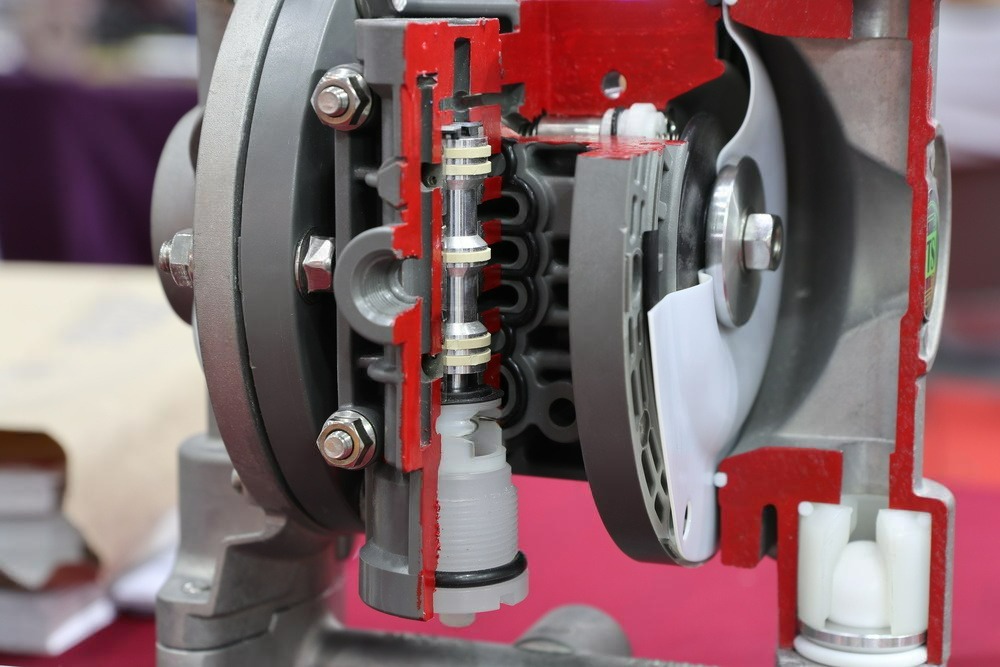
A diaphragm pump is a positive displacement pump that moves fluid through the reciprocating motion of one or more flexible diaphragms . The diaphragm creates a temporary chamber that alternately expands to draw fluid in and contracts to force fluid out through check valves. The fluid contacts only the diaphragm and the pump body—not mechanical moving parts—providing a sealed, leak-free design ideal for handling aggressive, toxic, or sensitive media .
How Diaphragm Pumps Work: Operating Principle
The working principle of a diaphragm pump can be understood through three key phases :
Suction Stroke: The diaphragm retracts, creating negative pressure within the pump chamber. This vacuum draws fluid through the inlet valve, filling the chamber.
Discharge Stroke: The diaphragm moves forward, increasing chamber pressure. The inlet valve closes, the outlet valve opens, and fluid is pushed into the discharge line.
Cycle Repetition: This sequence repeats continuously, creating a pulsating flow profile typical of positive displacement pumps.
Industrial Double Diaphragm Configuration: Most industrial diaphragm pumps feature two diaphragms mechanically coupled via a central shaft. One diaphragm performs the suction stroke while the other executes the discharge stroke, providing a more balanced and continuous flow .
Two Main Drive Types: AODD and EODD
Industrial diaphragm pumps are categorized primarily by their drive mechanism:
Air-Operated Double Diaphragm (AODD) Pumps
AODD pumps use compressed air as the power source. An air distributor valve directs pressurized air alternately to the rear of each diaphragm, creating the reciprocating motion .
Key Advantages:
-
Intrinsically safe for ATEX-classified hazardous areas without additional electrical certification
-
Self-priming—capable of starting with a dry suction line
-
Dry-run tolerant without immediate damage
-
Infinitely variable flow control via air pressure adjustment
-
No electrical components in the pump assembly
-
Simple maintenance with minimal mechanical complexity
Limitations:
-
Higher energy cost (compressed air is typically 5-8 times more expensive than electricity per kWh)
-
Audible noise from air valve switching and exhaust
-
Pulsating discharge flow requiring dampeners for sensitive processes
-
Limited to moderate flow rates and pressures
Electrically Operated Double Diaphragm (EODD) Pumps
EODD pumps utilize electric motors with mechanical or hydraulic transmission systems to drive the diaphragms .
Key Advantages:
-
Higher energy efficiency, especially for continuous 24/7 operation
-
Lower noise levels compared to pneumatic versions
-
More precise flow control via frequency converters
-
Better integration with PLC-based automation systems
-
Stable, consistent performance
Limitations:
-
Requires ATEX-certified motor for explosive environments
-
More complex maintenance (motor and electronic components)
-
Higher initial investment for precision control systems
Selection Criteria for Industrial Applications
Proper pump selection is critical for optimal performance and service life. When specifying a diaphragm pump, consider these key parameters:
1. Fluid Compatibility
The chemical composition of the pumped media determines material selection :
Housing Materials:
-
Polypropylene (PP): Excellent chemical resistance for acids and bases
-
PVDF: Superior for highly corrosive chemicals and elevated temperatures
-
Stainless Steel (AISI 316L): Hygienic applications, food/pharmaceutical, corrosive environments
-
Aluminum: Lightweight, general industrial applications
2. Flow Rate and Pressure Requirements
The pump’s flow rate is proportional to operating pressure and available power . Industrial AODD pumps typically achieve flow rates from 5 to 800 liters per minute at 6 bar operating pressure, depending on pump size. Always factor in a 10-20% margin for viscosity changes and component wear .
Critical Considerations:
-
Flow and pressure have an inverse relationship—increasing one typically reduces the other
-
High-viscosity fluids require larger valves, lower stroke frequencies, and wider flow paths
-
Solid particles necessitate appropriate valve configurations (ball valves handle particles better than flapper designs)
3. Suction Conditions
To maximize pump performance, minimize suction-side losses:
-
Position the pump as close to the media source as possible
-
Use short, straight suction pipes with minimal bends
-
Avoid flexible hoses that may kink or collapse under vacuum
-
Install appropriately sized suction strainers to protect the pump from debris
4. Environmental Factors
Industrial installations must account for:
-
Temperature extremes: Both ambient and fluid temperatures affect material selection
-
ATEX requirements: Explosive atmospheres require special certifications
-
Noise limitations: Consider pulsation dampeners and silencers for noise-sensitive areas
-
Space constraints: Compact designs may be necessary for tight installations
Common Industrial Applications
Diaphragm pumps serve critical roles across diverse industrial sectors:
Chemical Processing: Transfer of acids, bases, solvents, and aggressive formulations requiring leak-free operation .
Mining and Minerals Processing: Handling abrasive slurries containing solid particles. Ball valve configurations are preferred for particle-laden fluids .
Oil and Gas: Chemical injection, produced water transfer, and glycol dehydration systems in both onshore and offshore installations.
Water and Wastewater Treatment: Dosing chemicals, sludge transfer, and membrane filtration systems .
Food and Beverage: Sanitary diaphragm pumps with stainless steel construction and FDA-approved elastomers for gentle handling of shear-sensitive products .
Pharmaceutical Manufacturing: Precision metering and contamination-free transfer meeting strict hygiene and documentation requirements .
Surface Treatment and Painting: Transfer of paints, coatings, and aggressive chemicals with consistent pressure delivery.
Key Technical Specifications
Understanding the following specifications is essential for proper pump selection:
| Parameter |
Description |
Importance |
| Maximum Flow Rate |
Volume per unit time (L/min, m³/h, GPM) |
Sizing for process requirements |
| Maximum Operating Pressure |
Back pressure capacity (bar, psi) |
Determining discharge capability |
| Suction Lift |
Self-priming height capability (meters) |
Installation planning |
| Solids Handling |
Maximum particle size and concentration |
Abrasive media applications |
| Temperature Range |
Fluid and ambient temperature limits |
Material compatibility |
| Air Consumption (AODD) |
Compressed air usage (m³/min, SCFM) |
Compressor sizing and energy cost |
| Power Requirement (EODD) |
Motor power (kW, HP) |
| Electrical infrastructure |
|
Maintenance and Troubleshooting
Common Wear Components
-
Diaphragms: The primary wear component. PTFE diaphragms offer superior chemical resistance but are more susceptible to mechanical damage; rubber diaphragms wear more gradually but may age chemically over time .
-
Check Valves (Ball/Flapper): Contamination or wear causes fluid backflow, leading to reduced output and inefficient operation .
-
Air Distributor Valve (AODD): Contamination in the valve causes irregular stroke cycling or pump stalling .
-
Shaft Seals: Wear allows leakage or disrupts synchronous diaphragm movement.
Troubleshooting Guide
| Symptom |
Likely Cause |
Corrective Action |
| Reduced flow |
Clogged suction strainer, worn diaphragm, valve leakage |
Clean strainer, replace diaphragm, inspect/clean valves |
| Pump stalls |
Air valve contamination, insufficient air pressure |
Clean/replace air valve, verify supply pressure |
| Irregular discharge |
Worn shaft connection, damaged diaphragm |
Inspect shaft, replace diaphragm assembly |
| Media in air exhaust (AODD) |
Diaphragm rupture |
Immediate diaphragm replacement |
| Excessive pulsation |
Insufficient dampening, check valve wear |
Install pulsation dampener, inspect valves |
Why Choose Beijing XLHJ International for Your Diaphragm Pump Needs
At Beijing XLHJ International Trading Co., LTD, we understand that selecting the right industrial diaphragm pump requires more than just comparing specifications on paper. Our technical specialists provide precise pump selection based on your specific operating conditions, fluid characteristics, and process requirements .
Our Commitment to You:
-
Expert Technical Consultation: Our engineers analyze your application parameters to recommend the optimal pump configuration, including housing materials, diaphragm elastomers, valve types, and drive options.
-
Best Market Conditions: We leverage our extensive industry relationships and efficient supply chain to provide competitive pricing without compromising quality.
-
Global Logistics Capabilities: We handle international shipping, customs clearance, and delivery to your facility anywhere in the world .
Contact our specialists today to discuss your industrial diaphragm pump requirements. We will provide a tailored solution that optimizes your process efficiency while minimizing total cost of ownership.
Beijing XLHJ International Trading Co., LTD
Website: www.beijingxlhj.com
Email: info@beijingxlhj.com ; sales@beijingxlhj.com
Sales department : +8618610417129
Frequently Asked Questions
Q: Can diaphragm pumps run dry without damage?
A: Yes, both AODD and EODD diaphragm pumps can operate dry for short periods without damage, making them suitable for applications where suction conditions may vary .
Q: How do I handle highly viscous fluids?
A: Select pumps with larger valve chambers, heavier valve balls, and operate at lower stroke frequencies to accommodate viscous media effectively .
Q: What causes pulsation and how is it managed?
A: Pulsation is inherent to positive displacement pumping. Install inline pulsation dampeners or use larger diameter piping to stabilize flow .
Q: Are diaphragm pumps suitable for abrasive slurries?
A: Yes, with proper material selection (Santoprene or special elastomers) and ball valve configurations, diaphragm pumps handle abrasive media effectively .
Q: How often should diaphragms be replaced?
A: Replacement intervals depend on operating conditions, media aggressiveness, and cycle frequency. Implement condition monitoring based on operating hours and stroke count for optimal scheduling






 22.10.2026