







 22.10.2026
Engine Repair and Reconditioning Machines
A proper engine overhaul is not guesswork — it’s a sequence of precise machining operations: restoring the geometry of the cylinder block and head, crankshaft, connecting rods, valve seats and guides, plus a leak-tightness check once repairs are complete. Each step relies on a dedicated machine, and the service life of the rebuilt engine depends directly on that machine’s accuracy. Beijing XLHJ International supplies equipment for engine machine shops and service centers — from single machines for a specific operation to full workshop fit-outs — together with consumables (cutting tools, honing stones, grinding wheels, sealing plugs) and after-sales technical support.
Below is an overview of the main machine groups used in engine reconditioning: what they do, how they work, and what to check before buying.
Cylinder Block Machining
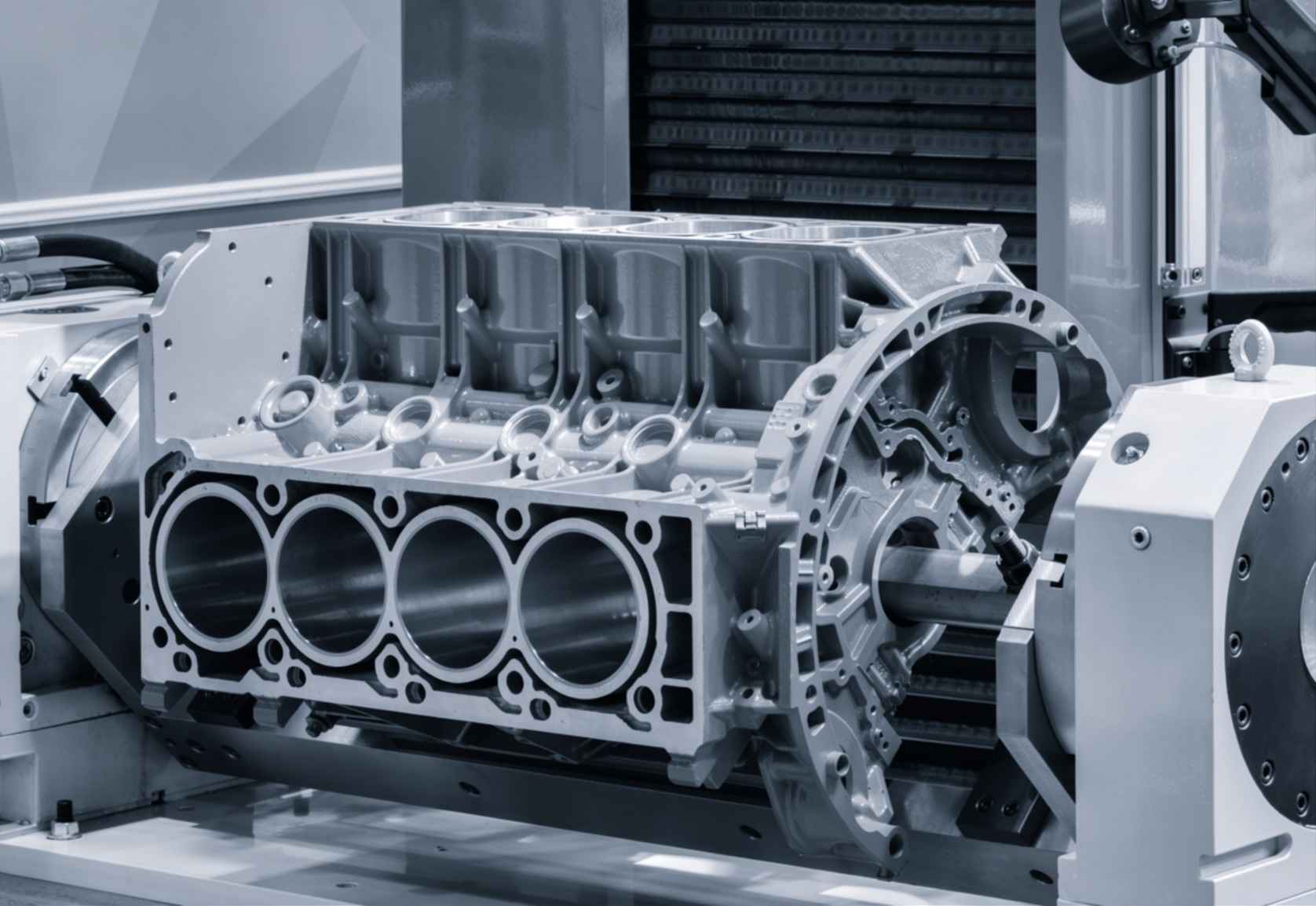
The cylinder block is the structural core of the engine, and most reconditioning operations depend on the precise relative alignment of three references: the main bearing bore centerline, the cylinder bore axis, and the head-mating deck surface. An error at one stage undermines the accuracy of every operation that follows, which is why block-machining equipment is usually specified as a coordinated set rather than a collection of unrelated machines.
Horizontal and Vertical Boring Machines for Cylinder Blocks
A horizontal line boring machine restores the alignment of the crankshaft’s main bearing bores: a boring bar carrying a cutter head is passed through all the bearing supports of a block that has been set up and rigidly clamped on the machine table. The goal is to bring the bearing bores back to correct diameter and — more importantly — to a single true centerline after wear, overheating, or a spun bearing. A vertical boring (or boring-milling) machine works on a different axis and solves a different problem: it bores the cylinders out to an oversize dimension, removing wear and restoring roundness and taper-free geometry along the bore’s length. On some machines, bearing-bore boring, cylinder boring and deck resurfacing are combined in a single CNC work center, eliminating repeat setups and the positioning error that comes with them.
Application: blocks of diesel engines used in trucks, construction and road-building machinery, generator sets, marine and stationary industrial engines — anywhere a block is reconditioned rather than replaced.
Why it matters for the shop: incorrectly bored bearing bores are one of the leading causes of repeat engine failure (spun bearings, accelerated crankshaft wear). A machine with proven positioning accuracy reduces comeback rates and builds a shop’s reputation.
Cylinder Honing Machines
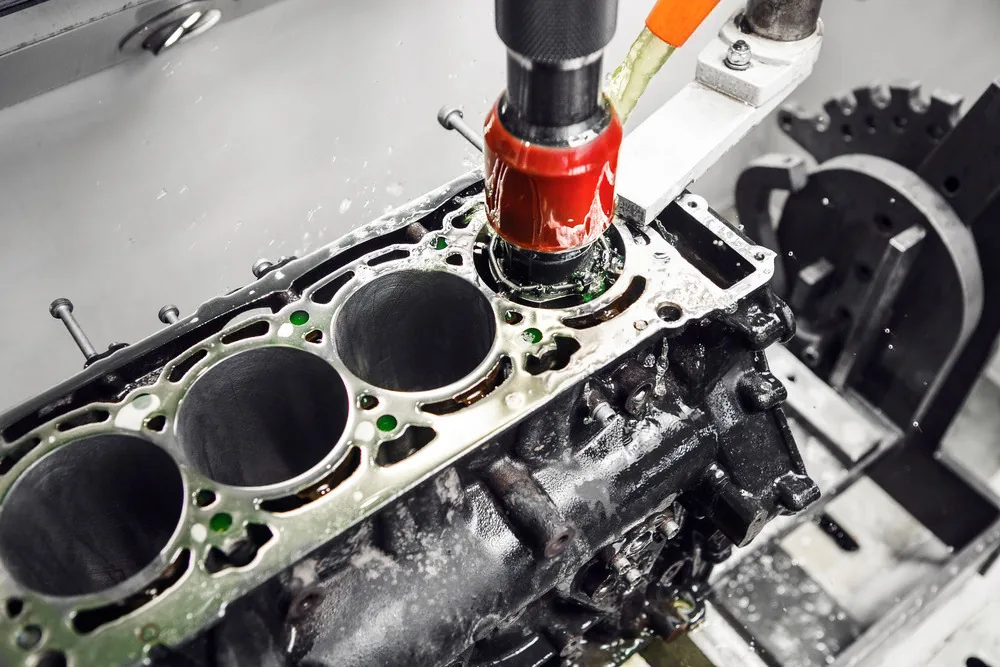
Every bored cylinder must be honed — this is a functional step, not a cosmetic one. A honing head fitted with abrasive stones moves with a combined rotary and reciprocating motion, removing a minimal layer of material while cutting a crosshatch pattern into the bore wall at a controlled angle. This micro-texture retains the oil film, allows the piston rings to seat and break in correctly, and directly affects oil consumption and compression once the engine is reassembled. Crosshatch angle, stone grit and speed are matched to the bore material (cast iron, alloyed steel, coated liners) and the ring type in use.
Application: cylinder blocks and liners of diesel and gasoline engines of any displacement — from compact generator power units to multi-cylinder heavy-equipment engines.
Why it matters for the shop: honing quality, not just boring accuracy, determines whether a rebuilt engine burns oil in its first hours of operation. It’s one of the most common sources of after-sales complaints, which makes an in-house honing machine a strong selling point.
Surface Grinding-Milling Machines for Cylinder Blocks
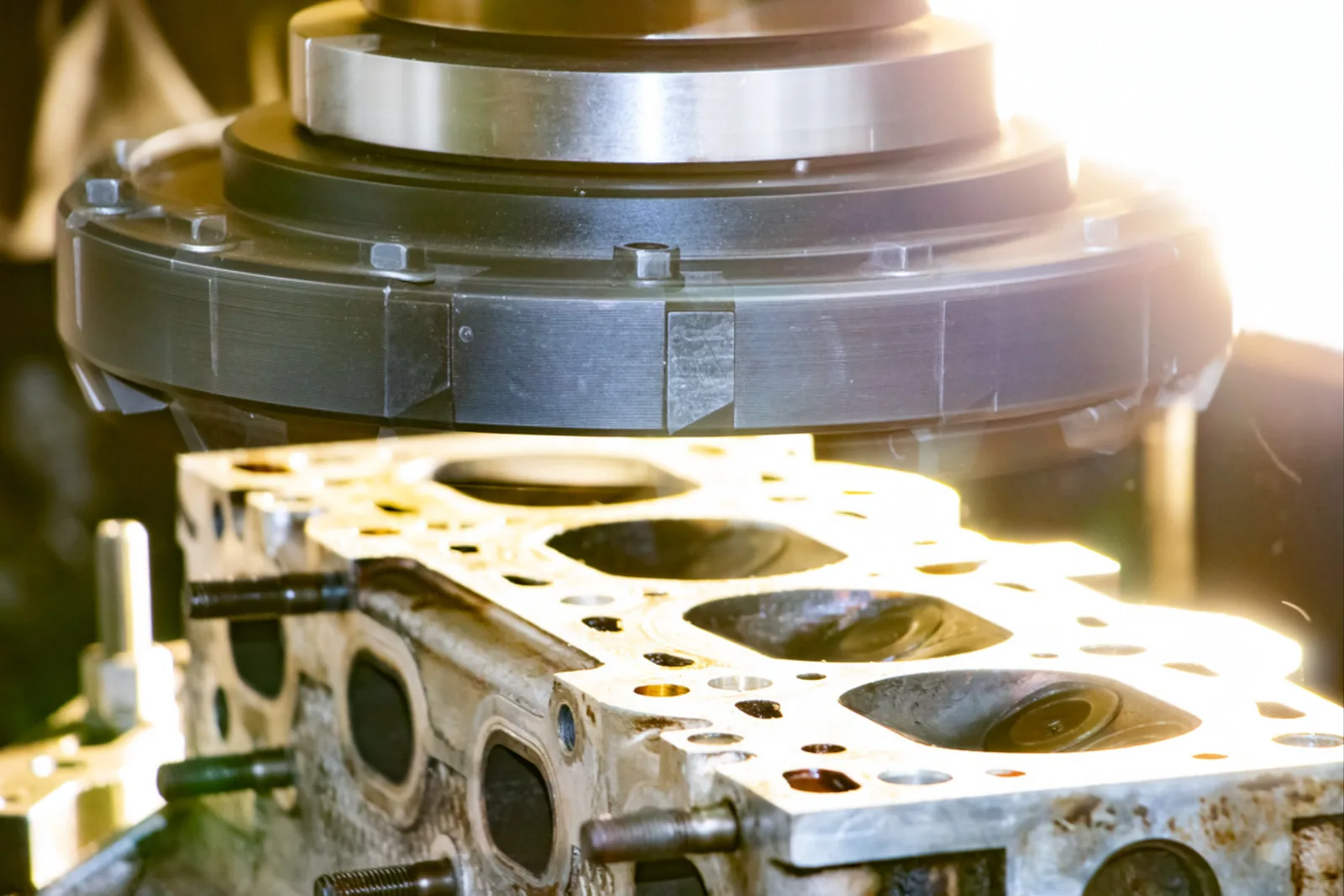
The block’s deck surface — and, symmetrically, the head’s mating surface — must be perfectly flat and square to the cylinder axis, since it’s what allows the head gasket to seal evenly. Overheating, warping and previous uneven bolt torque distort this surface by tens or hundreds of microns — invisible to the eye, but enough to blow a gasket and let coolant into the oil. A surface grinding-milling machine removes a minimal layer of material with a milling cutter or grinding wheel in one or several passes, restoring flatness and the specific roughness required for a given gasket type (metal, multi-layer steel, or fiber gasket).
Application: cylinder blocks and heads of truck, construction and industrial engines, as well as flywheels and brake drums/discs — the surfacing principle for these components is essentially the same.
Why it matters for the shop: an unmachined or unevenly machined deck is a common reason for an engine coming back after a rebuild due to coolant leaks or a blown gasket. Checking flatness before assembly is a mandatory checkpoint in any well-run engine shop’s process.
Cylinder and Cylinder Head Pressure Testing Machines
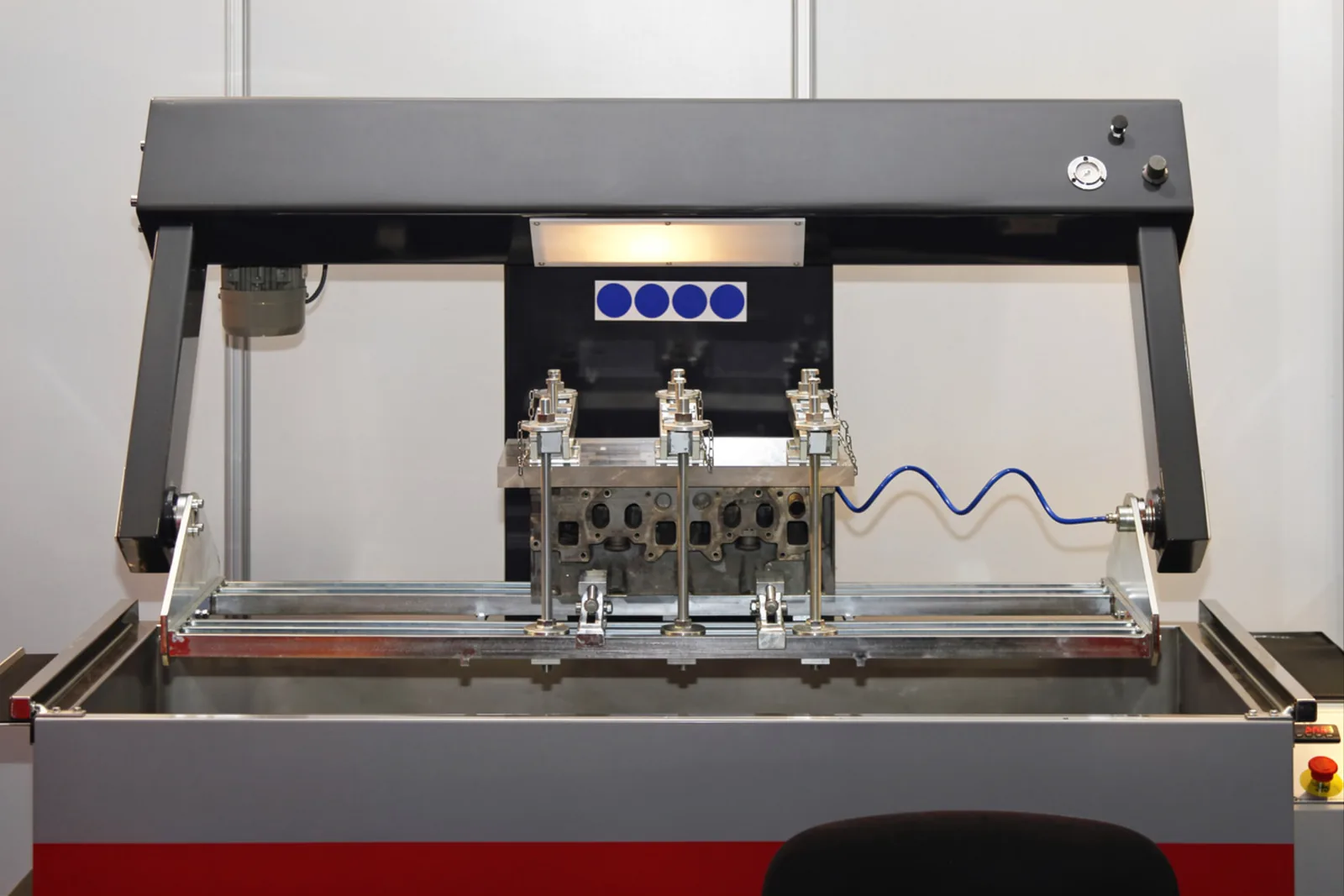
Before reconditioning — and always after any welded or bonded crack repair — a block or head must be checked for water-jacket leak-tightness. The typical method: every coolant port on the part is sealed, the part is submerged in a heated water bath, and the internal cavity is pressurized with compressed air to a controlled level. A crack or casting porosity shows up as a stream of air bubbles rising from the affected area, allowing the defect to be located precisely. A 360° rotating fixture lets the part be inspected from every side without a second setup. Some machines combine pressure testing with water heating and automatic pressure-decay monitoring over time.
Application: diesel and gasoline cylinder heads and blocks of any coolant-passage complexity — from inline to multi-cylinder V-configuration engines.
Why it matters for the shop: a missed hidden crack means a guaranteed warranty comeback and a full engine teardown. Mandatory pressure testing before assembly is a baseline requirement for a reputable engine shop, and skipping it is a source of the most expensive claims.
Cylinder Head Machining
The cylinder head carries the valve train and combustion chambers, so head reconditioning centers on the valve seats and guides — their geometry determines compression, combustion-chamber sealing and valvetrain service life.
Valve Seat Boring Machines
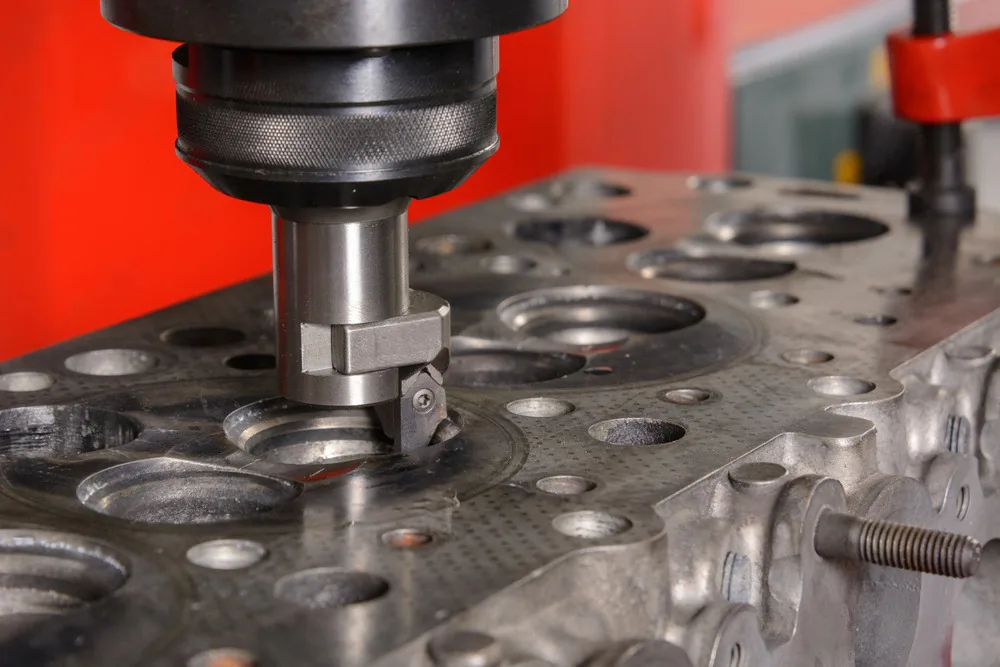
A worn, sunken or damaged valve seat is bored out to an oversize dimension to accept a larger-diameter insert ring, with precise control of concentricity relative to the valve guide and the counterbore depth. The tool is normally centered through a precision pilot fitted into the valve guide, ensuring the seat and valve stem remain on the same axis within a tight tolerance. This step directly determines the interference fit of the new seat insert and, consequently, heat transfer from the valve into the head — a critical parameter for exhaust valves.
Application: cylinder heads of truck and off-highway diesel engines, as well as turbocharged industrial generator engines, where exhaust seats operate under heavy thermal load.
Why it matters for the shop: a poorly seated insert can work loose over time — one of the most costly warranty scenarios in engine machining, requiring a completed engine to be torn back down.
Valve Seat Grinding Machines
While boring establishes the seat’s fit in the head, grinding finishes the working face geometry — the seating angle, the width of the contact band, and its concentricity with the guide axis. Modern machines cut multi-angle (three- or five-angle) seats in a single setup, improving intake flow and seal integrity while reducing the risk of seat burning. Accuracy here is measured in tens of microns and is verified by checking runout of the seat face relative to the guide.
Application: modern multi-valve heads on diesel and gasoline engines used in commercial vehicles, where multi-angle seat geometry is factory standard rather than an option.
Why it matters for the shop: correct seat geometry means proper compression and a smooth idle right after assembly, with no manual “lapping in” of valves needed.
Valve Guide Machining Equipment
The valve guide sets the axis of stem travel and directly determines alignment with the seat. When worn, the guide is bored for a replacement bushing (or reamed to an oversize stem dimension); the seat must then always be re-cut on the new guide axis, not the other way around. The key controlled parameter is guide-to-stem clearance: too much clearance increases oil consumption through the valve seals and causes valvetrain noise, while too little causes scuffing and stem seizure under thermal expansion.
Application: cylinder heads of any diesel or gasoline engine designed for replaceable guides (bronze or cast-iron bushings).
Why it matters for the shop: guide and seat machining cannot be done independently of each other without losing concentricity — offering both under one roof is a genuine competitive advantage for a shop.
Crankshaft Machining
Crankshaft Grinding Machines
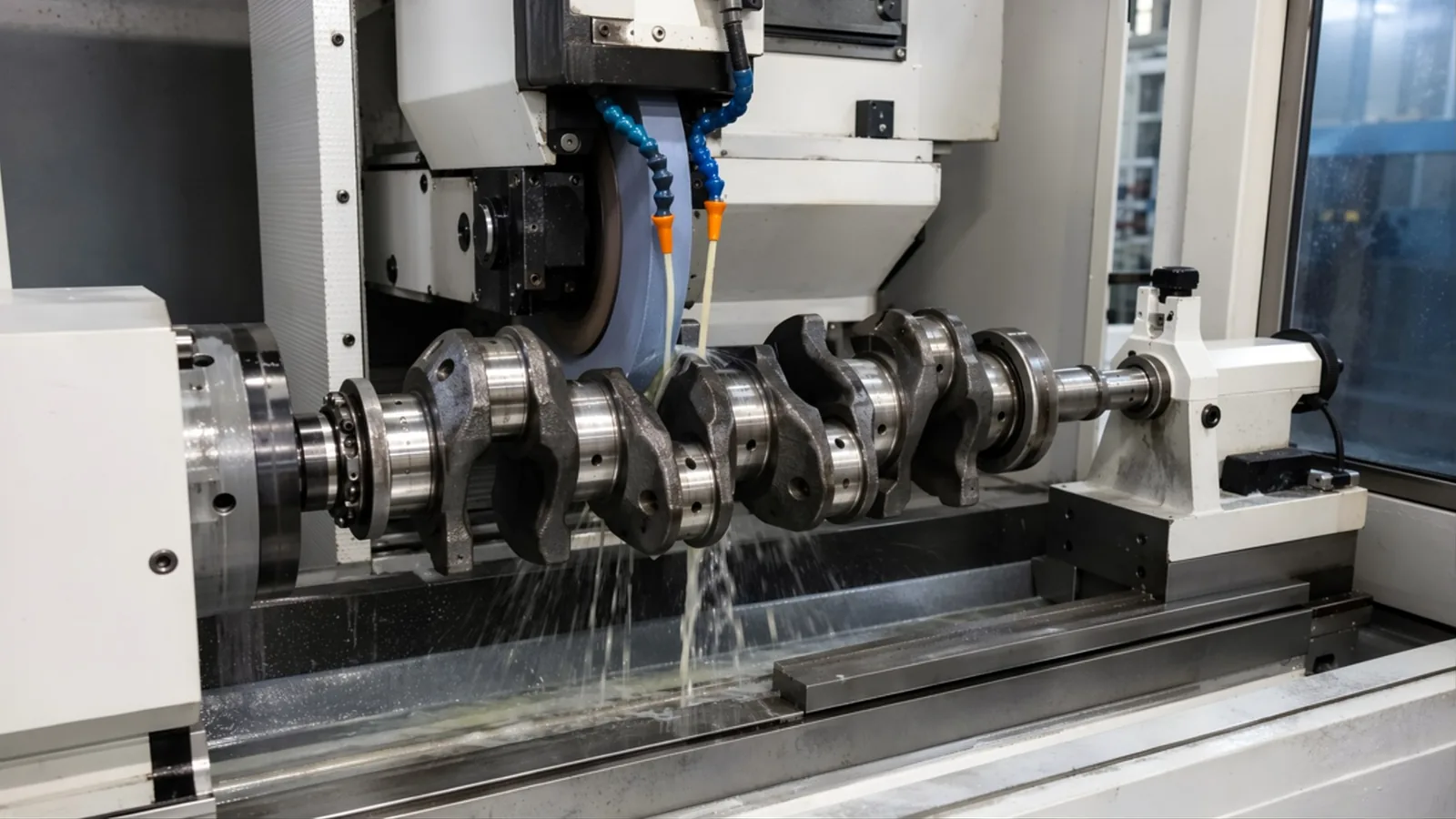
The crankshaft is mounted in the machine on its main journals (or in special fixturing for eccentric rod-journal work) and ground with an abrasive wheel to remove wear, ovality and taper. The result is a smaller, undersize journal diameter matched to a set of correspondingly thicker undersize bearing shells. Modern machines monitor journal profile in real time and can machine main journals, rod journals, fillets and thrust faces in a single setup, minimizing centerline drift and runout. Ground journals are always polished afterward to reduce surface roughness and extend bearing life.
Application: crankshafts of diesel engines used in trucks, construction and warehouse equipment, generator sets, and marine power units — components subject to high unit loading on the journals.
Why it matters for the shop: regrinding a crankshaft is far cheaper than replacing it with a new or remanufactured unit, and with properly controlled geometry it matches that service life — a direct argument in pricing conversations with the customer.
Connecting Rod Machining
Connecting Rod Boring Machines
A connecting rod goes through two key checks and operations: bend/twist geometry inspection, and boring of the big end to an undersize dimension after wear or a spun bearing, along with pressing and boring/honing of the small-end bushing for the piston pin. The critical parameter is the parallelism and alignment of the big-end and small-end bores in two planes: any deviation here tilts the piston in the bore, accelerating wear on the piston skirt and cylinder wall. A dedicated machine holds the rod in precision fixturing and bores the big end while controlling both diameter and this alignment simultaneously.
Application: connecting rods of diesel engines in trucks, construction, road-building equipment and generator sets — components where a rod set is often reconditioned rather than fully replaced.
Why it matters for the shop: an undetected rod misalignment is a common hidden cause of engine knock returning after a rebuild, even when every other component checks out on paper; checking and boring rods in-house closes this blind spot.
Cylinder Liner Machining
Cylinder Liner Boring Machines
Replaceable liners — wet liners, which contact the coolant directly, and dry liners, press-fitted into the block — require final bore machining to the piston’s nominal diameter and subsequent honing after installation. A separate operation is boring the liner seat in the block itself, when the original seat is worn or the block is being converted to a linered design. Controlled parameters include the diameter and roundness of the liner seat, the interference fit (for dry liners), or the amount the liner flange protrudes above the deck surface (for wet liners) — the latter directly determines head-gasket sealing quality.
Application: cylinder blocks of truck and construction-equipment diesel engines with replaceable liners — the standard design for most heavy-duty diesels.
Why it matters for the shop: a linered block design exists precisely so an overhaul doesn’t require replacing the entire block — but only when the shop has the equipment to bore and fit liners accurately.
Flywheel Machining
Flywheel Grinding Machines
The flywheel’s friction surface, in contact with the clutch driven disc, wears unevenly, discolors from overheating, and develops micro-cracking from sustained clutch slip. A dedicated grinder rotates the flywheel, referencing it off the crankshaft mounting flange (preserving the same centerline it has in the running engine), and grinds the working surface with an abrasive wheel, removing a minimal layer of material and eliminating hard spots and heat damage. On stepped or lightweight flywheels, preserving the original step height and overall mass within tolerance is essential — otherwise clutch engagement characteristics change.
Application: flywheels of diesel and gasoline engines in trucks and off-highway equipment, including large-diameter clutch flywheels.
Why it matters for the shop: flywheel resurfacing at clutch replacement is a standard recommended step that reduces the risk of vibration and premature failure of a new clutch kit — meaning fewer repeat visits for the customer.
Brake Drum and Disc Machining
Brake Drum and Disc Lathes
A brake drum or disc is turned on a dedicated lathe to remove ovality, out-of-round wear, scoring and surface waviness that develop in service. Resurfacing is limited to the maximum allowable thickness/diameter reduction specified by the component manufacturer — exceeding it is never acceptable, since it reduces mechanical strength and creates a risk of failure under load. Some machines built for large truck and heavy-equipment drums use an outboard tool-post system with independent feed control, allowing large-diameter, high-mass drums to be machined without losing accuracy.
Application: brake drums and discs of trucks, trailers and construction/road-building equipment — components significantly larger than their passenger-car counterparts.
Why it matters for the shop: resurfacing instead of replacing a drum or disc is a cost-effective option for the customer in cases of moderate wear, and a solid margin service line for the shop.
Conclusion and After-Sales Support
Beijing XLHJ International supplies engine reconditioning machines both as standalone units for a specific operation and as complete workshop fit-out solutions. Every shipment can include consumables and tooling (cutting inserts, honing stones and heads, grinding wheels, test-machine fixtures and seals), together with technical support during commissioning and ongoing spare-parts supply — allowing a service center to minimize equipment downtime and keep the machine shop running without consumable-supply interruptions.