
Industrial Gear Pump Guide: Engineering Principles, Selection, and Application

breadcrab News
Sections
news news
Industrial Gear Pump Guide: Engineering Principles, Selection, and Application

Introduction

In heavy industry, few components are as crucial yet underappreciated as the gear pump. For engineers designing hydraulic systems, chemical transfer lines, or lubrication circuits, understanding the full capabilities and limitations of this technology is essential. Gear pumps represent the backbone of modern fluid power, offering a combination of durability, precision, and reliability that other pump types struggle to match .

This guide provides a comprehensive technical overview of industrial gear pumps for engineering professionals. Whether you are specifying equipment for a petrochemical facility in Texas, a mining operation in South Africa, a manufacturing plant in Germany, or an oilfield in Brazil, the principles outlined here will inform your decision-making process.

What is an Industrial Gear Pump?

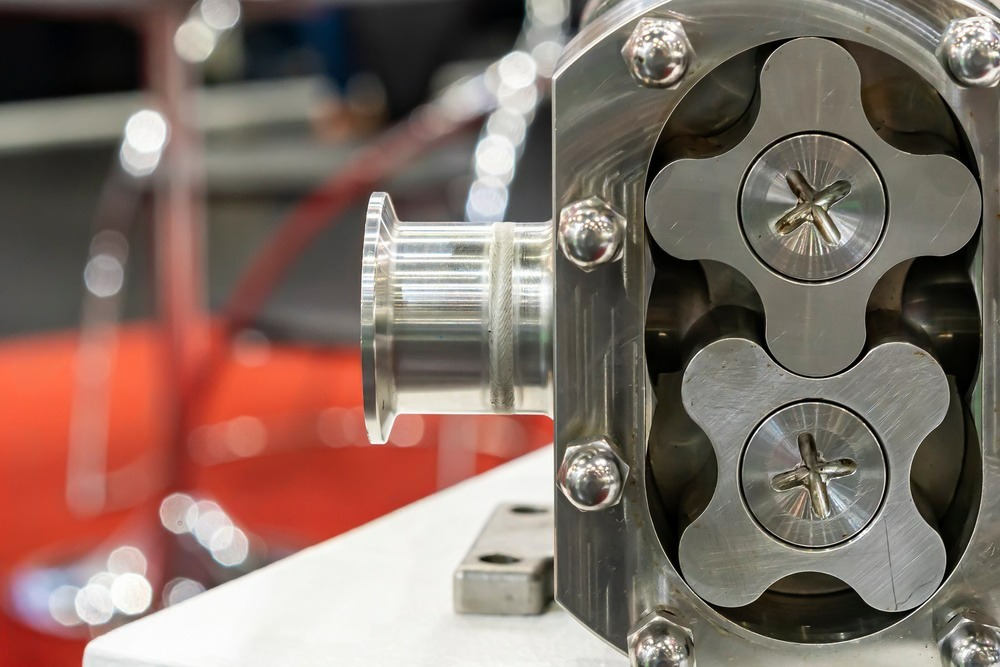
An industrial gear pump is a positive displacement pump that uses the meshing of gears to move fluid. Unlike centrifugal pumps, which impart kinetic energy to fluids, gear pumps trap a fixed volume of fluid between gear teeth and the pump housing, physically displacing it from the inlet to the outlet .

Key Distinction: This positive displacement action means the pump generates a consistent flow rate regardless of discharge pressure (within the pump’s design limits), making them ideal for precise metering and high-pressure applications .

Operating Principle and Design Fundamentals

The operational cycle of a gear pump follows a consistent pattern:

  1. Suction Phase: As the gears rotate, they unmesh on the inlet side, creating a low-pressure area. Atmospheric pressure (or inlet pressure from a supply tank) forces fluid into the cavities between the gear teeth .

  2. Transport Phase: The fluid is carried around the outer periphery of the gears, trapped between the gear teeth and the pump housing wall. This positive sealing action prevents backflow and ensures volumetric efficiency .

  3. Discharge Phase: The gears mesh again at the outlet, forcing fluid out of the cavities and into the discharge line under pressure .

Flow Characteristics: Gear pumps produce a nearly pulse-free flow. While all positive displacement pumps have some flow pulsation, the continuous meshing action of the gears creates a smooth, non-fluctuating stream, critical for applications requiring stable operation and accurate dosing .

Types of Industrial Gear Pumps

Understanding the two primary configurations is fundamental to proper pump selection.

Feature External Gear Pump Internal Gear Pump
Design Two identical, externally-toothed gears mesh side-by-side within a tight casing . A smaller externally-toothed gear (rotor) rotates inside a larger internally-toothed gear (idler), mounted eccentrically .
Pressure Capability High Pressure, typically up to 30 bar (and higher in specialized designs) . Medium Pressure, generally up to 15 bar .
Flow Rate High Flow, up to 300 m³/h . Medium Flow, up to 200 m³/h .
Viscosity Handling Suitable for low-to-medium viscosity fluids and lubricating liquids . Superior for high-viscosity fluids and can handle small solids .
Common Applications Hydraulic systems (mobile and industrial), fuel injection, lubrication, coolant transfer . Chemical transfer, polymers, paints, food products (syrups, chocolate), and viscous oils .

Critical Selection Parameters for Engineers

Selecting the correct gear pump for an industrial application requires detailed analysis. The following factors must be evaluated:

1. Fluid Properties:

  • Viscosity: This is the most critical factor. Gear pumps excel with viscous fluids. Higher viscosity reduces internal slip (leakage), improving volumetric efficiency. However, higher viscosity also increases the power required to turn the pump .

    • Rule of Thumb: For fluids with viscosities exceeding 500 SSU, pump speed (RPM) must be reduced to prevent cavitation and excessive wear. Recommended operating speeds drop to 900 RPM for viscosities up to 9,000 SSU, and down to 650 RPM for 10,000-40,000 SSU .

  • Lubricity: Gear pumps rely on the pumped fluid for lubrication of moving parts. Non-lubricating fluids (e.g., water) require special considerations like carbon bearings or grease fittings .

  • Temperature: Operating temperature impacts viscosity and the pump’s material integrity. The lowest expected temperature during startup should be used to determine power requirements, as this is when the fluid will be thickest .

2. System Pressure:

  • Calculate total pump discharge pressure: Add suction lift (in feet) to discharge elevation (in feet); divide by 2.31 to convert to PSI. Add this figure to the discharge pressure required in PSI. The sum is the total pump pressure needed .

3. Power Requirements:

  • Horsepower (HP) calculations must consider both the highest expected system pressure and the highest fluid viscosity. Over-sizing the motor is a common safety practice to account for cold startups .

Advanced Engineering Considerations

1. Flow Pulsation and Pressure Ripple:

  • While minimal, gear pumps do have inherent flow pulsations. The degree of pulsation is inversely proportional to the number of teeth on the gears – more teeth mean less pulsation. However, more teeth also reduce the displacement per revolution, leading to a design trade-off .

2. Material Compatibility:

  • Wetted materials must be compatible with the pumped chemical. Pumps are available in various constructions, including cast iron, bronze, stainless steel, and composite materials. Selection depends on the specific fluid’s corrosive, abrasive, or caustic qualities .

3. Wear and Failure Modes:

  • Common Failure Points: Gear pumps typically fail due to wear on the gear ends and side plates, or bushings. This wear leads to increased internal clearances, which manifests as a loss of volumetric efficiency and an inability to generate pressure .

  • Critical Clearances: In a new pump, the clearance between the shaft and bearing is within 0.002 – 0.003 inches. The gear face should be even with or slightly above (0.001 inches) the body flange. When these clearances open up to 0.005 – 0.007 inches, the pump can lose 30-40% of its pressure-generating capacity .

Maintenance and Troubleshooting

Industrial gear pumps are robust, but require a proactive maintenance schedule to maximize lifespan and avoid catastrophic failure.

Best Practices:

  • Fluid Cleanliness: Contamination is the leading cause of premature failure. Use suction strainers and return-line filters to keep the fluid clean .

  • Shaft Alignment: Misalignment between the pump and drive motor is a primary cause of bearing wear. Ensure concentricity within 0.002 inches .

  • Avoid Dry Starts: Gear pumps are self-priming but should never be run dry. The gears and bushings rely on the pumped fluid for lubrication. Even a few seconds of dry running can cause immediate damage .

  • Monitor Temperature: If the pump casing exceeds 160°F (71°C), investigate immediately. High temperatures indicate internal friction, excessive back-pressure, or worn components .

Troubleshooting Table :

Problem Potential Cause(s) Corrective Action
Loss of Pressure/Flow Excessive internal clearances, worn gears or bushings, sheared drive pin. Replace the pump element or the entire pump if wear is severe.
Excessive Noise Cavitation (blocked suction, high vacuum), misalignment, worn bearings. Check suction line design, clean filters, ensure no restrictions; align shafts.
Overheating High back-pressure, internal leakage, fluid viscosity too high for speed. Check relief valve setting, inspect for wear, reduce pump speed or replace with a larger pump.
Leaking Shaft Seal Damaged seal, high inlet pressure, chemical attack. Replace seals, verify inlet pressure does not exceed 5 PSI, check material compatibility.

Why Choose Beijing XLHJ International?

At Beijing XLHJ International Trading Co., Ltd. , we understand that the success of your project depends on more than just the components – it depends on the right partnership. With our extensive experience in supplying heavy-duty industrial equipment globally, we are your trusted partner for sourcing high-quality, cost-effective gear pumps from China.

We provide comprehensive solutions tailored to the industrial markets of Africa, the Americas, and Europe. Our technical experts can analyze your specific process parameters – fluid viscosity, system pressure, temperature, and material compatibility – to deliver a precise pump selection that meets and exceeds your expectations. We provide the best commercial terms and ensure supply chain reliability.

Contact our engineering support team today for a consultation.